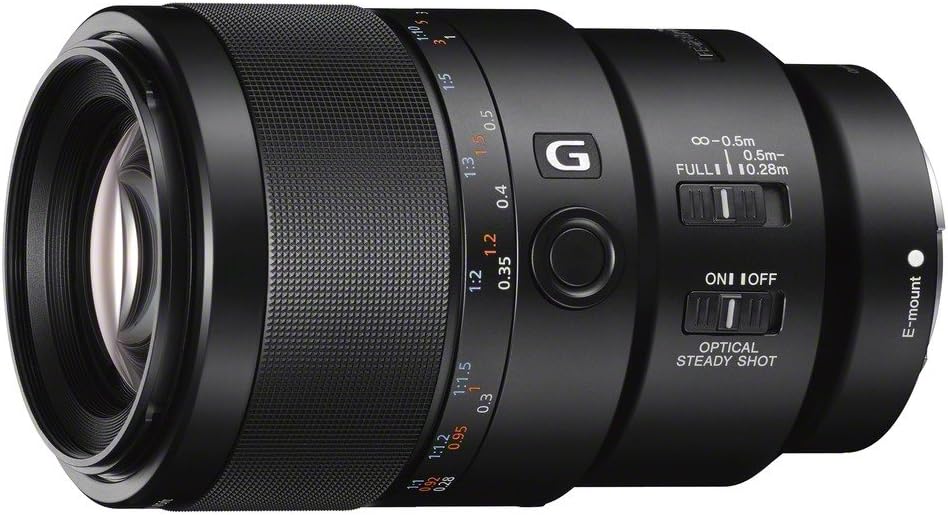
Sony FE 90mm F2.8 Macro G OSS Full-Frame Lens
4.6Editor score
True 1.0x magnification
Full-frame E-mount compatibility
Optical Steady Shot stabilization
9-blade circular aperture
Our expert guide compares the best macro lens for insect photography, covering magnification, compatibility, stabilization, focus, optics, and field use.
Macro lens for insect photography must deliver more than close-up magnification. It also needs dependable focus, enough light, effective stabilization, and a practical working distance that will not frighten small subjects. The right choice depends on whether you use a phone, crop-sensor camera, or full-frame system.
This guide compares ten macro solutions by examining magnification, optical design, focusing behavior, camera compatibility, stabilization, light-gathering capability, and the practicalities of working outdoors. It includes clip-on phone attachments, close-up filters, dedicated APS-C lenses, full-frame macro lenses, and conversion options for existing camera lenses.
Each pick reveals what its magnification and construction are best suited for, from convenient phone-based nature photography to demanding full-frame insect work. Ratings reflect the supplied customer feedback, while prices and availability can change. Buyers should confirm both their camera system and their intended subjects before making a final choice.
4.6Editor score

4.7Editor score

4.6Editor score
The comparison below covers native macro lenses, phone attachments, close-up filters, and conversion lenses, making it possible to compare working distance, magnification, platform support, stabilization, and intended use without treating every product as the same type of tool.


The APEXEL 100Ultra is a clip-on smartphone lens aimed at photographers who want insect and plant details without carrying a dedicated interchangeable-lens camera. It carries a 4.0 rating and combines an advertised 10x magnification level with a 50-110mm telephoto macro focal range. Its most useful feature for insect work is the ability to photograph small subjects from a more comfortable distance.
We may earn a commission when you buy through this link, at no additional cost to you.
The stated F1.05 aperture is designed to support shallow depth of field and smooth background separation, while the multi-lens combination is claimed to provide high light transmittance and reduce reflections. Those characteristics suit close-up images of flowers, insects, and other small natural subjects. A universal clip-on design also makes the lens much easier to introduce to macro photography than a camera-specific product.
There are trade-offs inherent in the phone approach. A clip-on accessory depends on accurate alignment with the phone camera, and an insect may move while the photographer adjusts position. The advertised 10x figure also describes an optical accessory rather than a digital crop, but actual framing can vary by phone software and camera selection. The bright listed aperture is impressive, yet real results remain affected by subject distance, lighting, and phone processing.
This is a strong choice for beginners, travel photographers, and anyone who wants one compact accessory to improve a phone camera. It is less suitable for a photographer who needs true interchangeable-lens control, electronic autofocus, or repeatable full-frame detail. For those needs, consider a dedicated macro lens; for convenient access to magnified insect photos, the 100Ultra is one of the most capable options in the list.
The telephoto macro range helps photographers maintain more distance from active insects. This reduces the chance of disturbing a subject and makes it easier to keep the insect within the narrow field of view produced by strong magnification.
The universal clip fits a wide range of phones, including iPhone and Samsung Galaxy models. That makes the lens useful for users who do not want to invest in a separate camera system, although careful alignment remains essential.
We may earn a commission when you buy through this link, at no additional cost to you.
The TTARTISAN 40mm f/2.8 is a dedicated APS-C macro prime for Sony E-mount cameras. It has a 4.4 rating and offers 1:1 magnification with a 6.7-inch minimum focusing distance, enough reach for detailed insect portraits without turning the lens into an extreme close-up attachment. It also supports portraits, still life, jewelry, and botanical photography.
We may earn a commission when you buy through this link, at no additional cost to you.
Its maximum f/2.8 aperture gives photographers more control over depth of field than a very slow macro lens, an important advantage when an insect is only millimeters deep in the frame. The 11-blade design is intended to create attractive background blur, while seven groups and eight elements—including dual LD glass—target reduced aberrations and solid clarity.
The compact body weighs 13.1 ounces and uses sturdy all-metal construction, making it easier to carry on walks than a much larger full-frame macro lens. The principal compromise is manual focusing. At 1:1 magnification, small focus movements can be demanding, particularly for a new photographer or when working around a moving subject. The f/2.8 aperture also means depth of field remains relatively shallow.
This lens is a compelling match for Sony APS-C and compatible full-frame photographers who want real macro capability without moving to an ultra-high-magnification specialty lens. It offers a particularly balanced combination of magnification, aperture, portability, and optical design. Users willing to learn manual focus should find it particularly rewarding for insects that remain still long enough for deliberate focusing.
A 1:1 magnification ratio records a subject at its actual size on the sensor. This provides a natural starting point for close portraits and allows fine features such as wing veins, scales, and compound eyes to become clearly visible.
The 13.1-ounce metal body keeps handheld work manageable, while f/2.8 provides enough light for controlled depth of field. Together, these traits suit nature walks where a heavy specialist setup would be less convenient.
We may earn a commission when you buy through this link, at no additional cost to you.
The ULANZI CL-003 is a 10x optical macro lens designed for phones that can use a 17mm threaded connection. It has a 4.3 rating and distinguishes itself with a tele-focusing method, a stated 45-90mm focusing range, and a 75mm lens design. It is aimed at users who want more deliberate focusing than a simple clip-on phone magnifier provides.
We may earn a commission when you buy through this link, at no additional cost to you.
Its upgraded optical combination is designed to improve light transmission and reduce distortion, producing clearer close-up images. The professional-lens appearance includes an aluminum alloy body and textured grip, while the focusing mechanism lets the user control shooting distance. For insect photography, that adjustment can be more useful than relying on a fixed-position attachment.
The main limitation is installation. It can use the included cold-shoe lens clip, but a 17mm screw-port phone case or rabbit cage provides a more secure, repeatable connection. Users should confirm their phone supports the required 17mm thread arrangement. Without that support, the clip works but demands more care to keep the lens centered over the active camera.
This is an attractive option for mobile photographers who want genuine optical magnification and adjustable focus without moving to a full camera body. It is less broadly compatible than a universal phone clip and less optically advanced than a dedicated camera macro lens. For compatible phone users, however, the 10x magnification and adjustable working distance make it a focused and practical choice.
The 45-90mm focusing range gives the photographer more control over subject distance than a fixed attachment. This is helpful for composing a tiny insect before taking the final frame.
A 17mm screw-port case or compatible rabbit cage can keep the lens aligned more consistently than a spring clip. That stability is valuable when magnification makes even a small camera shift visible.
We may earn a commission when you buy through this link, at no additional cost to you.
The FotoZ Macro Conversion Lens is an adaptable close-up attachment for photographers who already own a DSLR or mirrorless camera and want macro images without adding a dedicated macro lens. Its 4.6 rating reflects a favorable response among the supplied reviews. The stated 8-diopter specification provides meaningful close-up power for insects, flowers, jewelry, coins, and small objects.
We may earn a commission when you buy through this link, at no additional cost to you.
Compatibility is the central attraction. Included adapter rings support lenses with 37mm, 40.5mm, 43mm, 46mm, 49mm, 52mm, 55mm, 58mm, 62mm, 67mm, and 72mm filter threads. A three-element, three-group design with multi-coated glass is intended to control distortion and improve transmission, although attaching conversion optics to another lens does not preserve every advantage of a native macro design.
The spring-loaded, tool-free fitting makes the system easy to deploy in the field. Photographers can remove it when normal lens operation is needed, which adds flexibility to a kit containing only one camera body. The trade-off is that image quality depends on the chosen host lens, camera, adapter stack, and shooting distance. At close focus, aberrations and vignetting can become more visible.
Choose this product when convenience and versatility matter more than obtaining the absolute maximum performance. It is especially useful for existing camera owners who want to experiment with insect photography, product details, or flowers before committing to a dedicated macro lens. Users willing to select the right host lens and adapter can get a surprisingly capable close-up setup with minimal added equipment.
The conversion lens expands the close-up usefulness of an existing normal or telephoto lens. It is an economical way to test macro photography while retaining the option to remove the attachment when regular shooting resumes.
The broad thread list gives the system strong compatibility, but the host lens still influences the result. Choosing a well-regarded telephoto optic can produce a more useful working distance and cleaner close-up rendering than a kit zoom.
We may earn a commission when you buy through this link, at no additional cost to you.
The Canon RF100mm f/2.8 L Macro is a professional full-frame macro lens built for photographers who want exceptional subject detail. It has a 4.7 rating and offers a maximum magnification of 1.4x, exceeding life size. That makes it particularly compelling for insects, where fine structures such as scales, hairs, veins, and eyes can become the central subject.
We may earn a commission when you buy through this link, at no additional cost to you.
Its fixed f/2.8 aperture supports dependable exposure across the close-focus range and offers useful background separation without requiring extreme sensitivity settings. Optical stabilization provides up to five stops of shake correction, while a hybrid system addresses both angular and shift camera shake. Those features are particularly valuable at high magnification, where even modest movement can affect critical focus.
This is not a lightweight casual option. A dedicated 100mm f/2.8 macro lens is a substantial professional tool, and the body requires a compatible Canon RF camera. The spherical aberration control ring is a more specialized feature, allowing the photographer to adjust the character of foreground and background bokeh. This adds creative flexibility but also places responsibility on the user to understand how the effect changes across the frame.
The RF100mm is the strongest recommendation for a full-frame Canon photographer who demands maximum magnification and professional optical performance. Its 1.4x magnification, bright aperture, and sophisticated stabilization provide a complete macro system for insects and other demanding small subjects. The size and system commitment are substantial, but the results justify them for serious field work.
A 1.4x maximum magnification fills the frame with roughly one and a half times the subject's physical size. This extra scale is valuable when identifying subtle textures that would look too small at 1:1.
Optical and hybrid stabilization reduce angular and shift shake. This matters because magnification amplifies movement, helping the photographer maintain focus when a tripod is not being used.
We may earn a commission when you buy through this link, at no additional cost to you.
The Canon RF35mm f/1.8 Macro STM is a compact close-focus prime for EOS R-series cameras. It carries a 4.7 rating and offers 0.5x magnification, a 0.56-foot minimum focusing distance, and a bright f/1.8 maximum aperture. Rather than specializing in extreme macro magnification, it blends everyday photography with the ability to photograph small subjects at close range.
We may earn a commission when you buy through this link, at no additional cost to you.
That balance makes it useful for insects that are approaching or moving away from the camera, small flowers, food, and casual detail photography. The STM motor provides electronic focusing suitable for Canon RF cameras, and the direct control ring allows quick changes to settings. Optical image stabilization adds up to five stops of shake correction for more comfortable handheld operation.
The key limitation is magnification. At 0.5x, subjects appear half their real size on the sensor, so there is less room to isolate individual features than with a 1:1 or 1.4x macro lens. A wide f/1.8 aperture also creates shallow depth of field, although the lens can still provide attractive background separation. Users needing lens-level detail should consider the dedicated RF100mm instead.
This is a strong choice for Canon RF photographers who want one lightweight, versatile prime rather than a specialist macro body. It is especially appealing for travel, casual nature, and close-range work because it handles regular subjects as well as insects. The RF100mm remains the specialist, but the RF35mm delivers compelling close-ups in a substantially more everyday form factor.
The lens can cover normal photography and close focusing without changing equipment. That makes it convenient for trips where insect encounters are only one part of a broader shooting plan.
The f/1.8 aperture gathers substantial light and separates a nearby subject from its surroundings. Photographers should watch the narrow focus plane when insects are positioned at an angle.
We may earn a commission when you buy through this link, at no additional cost to you.
The Sony FE 90mm f/2.8 Macro G OSS is a dedicated full-frame macro lens with a 4.6 rating. It provides 1.0x maximum magnification, a 0.28-meter minimum focus distance, and a fixed f/2.8 aperture. For insect photographers, the combination of life-size detail, a useful working distance, and a bright lens makes it a well-rounded professional tool.
We may earn a commission when you buy through this link, at no additional cost to you.
Optical design supports corner-to-corner sharpness, with advanced spherical elements and Super ED glass intended to reduce flare and ghosting. A nine-blade circular aperture produces rounded bokeh, while a 27-degree full-frame angle of view narrows to 17 degrees on APS-C bodies. Nano AR coating further addresses reflections, and the dust- and moisture-resistant construction suits outdoor field conditions.
Sony's Direct Drive SSM provides quiet, precise autofocus, and the lens supports instant manual and automatic focus selection. Optical Steady Shot image stabilization assists handheld shooting. The 602-gram weight is the principal downside for long walks, but the grip and focal length can still make tracking a nearby insect practical. It is heavier and less specialized than the Canon RF100mm, yet less extreme in magnification.
This is an excellent recommendation for Sony full-frame and compatible APS-C photographers who want a proven 1:1 macro lens with a conventional focal length. It handles insects, flowers, jewelry, and products while providing enough aperture for selective focus. For users committed to the Sony E-mount, its balance of autofocus, stabilization, optical refinement, and weather resistance makes it a particularly complete macro solution.
True 1:1 magnification is paired with a 0.28-meter minimum focus distance. This allows insects to fill the frame while maintaining enough space for careful composition and movement.
The nine-blade circular aperture can create smooth out-of-focus highlights behind an insect. Super ED glass and advanced spherical elements support the lens's goal of strong sharpness and reduced flare.
We may earn a commission when you buy through this link, at no additional cost to you.
The 67mm Close-up Filter Kit offers four diopter strengths—+1, +2, +4, and +10—for photographers who want to add close-up capability to a lens with a 67mm filter thread. It has a 4.4 rating and is designed for flowers, coins, insects, and other small subjects. The set includes a nylon pouch, lens cap, and microfiber cleaning cloth.
We may earn a commission when you buy through this link, at no additional cost to you.
Its greatest advantage is flexibility. Each filter can be used independently, allowing the photographer to choose a moderate increase or stronger magnification, and the double-threaded construction allows selected filters to be stacked. The filters can also accommodate additional optics such as polarizers or skylight filters, subject to their own compatibility requirements.
The principal limitation is that the kit is available in a fixed 67mm size. Users must check the thread diameter printed on their lens barrel or lens cap before purchase. A close-up filter also adds optical surfaces in front of the camera lens, which can introduce softness, vignetting, or flare. Combining multiple close-up filters may increase magnification further but can also compound optical compromises.
This kit is most useful as an occasional close-up tool for someone who already owns a suitable 67mm lens. It offers more control than a single-strength filter and requires less commitment than a dedicated macro lens. For repeatable insect portraits or maximum detail, a native 1:1 lens remains preferable, but for experimentation and field flexibility, the four-filter set is practical.
Starting with the +1 filter gives a more natural look and may preserve image quality better than immediately stacking the strongest option. The +4 and +10 filters are better suited to smaller subjects and tighter framing.
The filter must match the lens's exact thread size. A mismatch prevents correct attachment, so checking the symbol and number on the lens barrel or underside of the cap is essential.
We may earn a commission when you buy through this link, at no additional cost to you.
The Xenvo Pro Lens Kit combines a 15x macro lens, 0.45x wide-angle lens, grip clip, rechargeable LED light, lanyard, protective case, and cleaning cloth. It has a 4.1 rating and is designed for iPhone, Android, Google Pixel, Huawei, Samsung, tablet, and laptop users. The package is aimed at mobile creators who want both close-up and broad-angle tools in one portable set.
We may earn a commission when you buy through this link, at no additional cost to you.
The Clarus 15x macro attachment can magnify very small nearby subjects, including insects, with precision focusing. The supplied instructions recommend positioning the macro lens approximately half an inch from the subject because it is not intended to zoom in on distant subjects. The TruGrip clip is designed to hold the lens more securely during active shooting than a basic loose-fitting clip.
The GlowClip mini LED is one of the kit's most useful additions for insect photography. It provides warm continuous fill light with three brightness levels, offering a gentler alternative to a phone's direct flash in darker settings. The 0.45x wide-angle lens handles travel, landscapes, architecture, pets, and selfies, while the included case and lanyard help protect and carry the components.
The Xenvo kit is a broad mobile bundle rather than a single-purpose macro product, so buyers should consider whether the extra accessories justify the package for their needs. Macro work demands very close positioning and accurate alignment, while the 15x figure is still accessory magnification rather than a native camera-lens ratio. For casual field observation and mobile content creation, however, the complete kit is convenient and versatile.
Continuous LED fill can reveal an insect's details without the harsh reflection produced by a direct phone flash. Warm illumination may also create a more natural look in shaded vegetation.
The 0.45x wide-angle lens broadens the kit beyond macro work. It can document the habitat around an insect before the photographer moves in for a tight detail.
We may earn a commission when you buy through this link, at no additional cost to you.
The AstrHori 25mm f/2.8 Ultra Macro is built for photographers who want to look beyond ordinary life-size reproduction. It has a 4.2 rating and works within a 2:1 to 5:1 magnification range, allowing subjects to appear between two and five times their actual size. That makes it especially useful for isolating tiny insect anatomy, scales, veins, and other minute structures.
We may earn a commission when you buy through this link, at no additional cost to you.
Its wide-angle configuration provides greater apparent depth of field than telephoto or long macro designs at comparable framing. The slim body also leaves space around the subject for lighting, which is a meaningful advantage in macro work. A maximum aperture of f/2.8 supports exposure and background separation, while manual focus gives photographers tactile control over the very small working distance.
The trade-offs are significant. Because the lens is optimized for close-up photography, it does not support infinity focus. The usable subject distance is extremely shallow, and even minor movement can alter focus or framing. Manual operation also requires practice. This is therefore a specialized instrument rather than an everyday lens, even though its physical design is relatively light.
Choose the AstrHori for extreme macro experiments, educational insect detail, and images where the subject is tiny and the photographer can work methodically. It is especially attractive for Sony E-mount users who want to illuminate a small subject from the side. Anyone needing general photography, distant insects, or conventional 1:1 framing should favor a standard 90mm or 100mm macro lens instead.
A 2:1 to 5:1 range can make minute structures fill the frame. This is useful when the defining feature of an insect occupies only a small portion of the overall body.
The slim design leaves room to position a light beside the lens. Because working distances are extremely short, careful lighting and patient positioning are essential.
We may earn a commission when you buy through this link, at no additional cost to you.
The most useful macro lens is not necessarily the one with the largest advertised magnification. Camera fit, working distance, light-gathering ability, stabilization, focusing method, and the photographer's tolerance for close-range setup all influence the final experience.
Start with the camera system you already own. Native options must match the exact lens mount, while adapters and close-up filters must match the filter-thread diameter of the lens they attach to. Phone products introduce a different check: determine whether your model supports a 17mm threaded connection or whether a clip-on arrangement is required. A compatible product is not useful if alignment, electronic communication, or physical clearance cannot be achieved.
Check the mount, sensor format, and listed camera models before ordering. For interchangeable lenses, full-frame products can often work on crop-sensor bodies with altered field of view, but manufacturer-specific behavior should be confirmed. For adapters, compare the available thread sizes with the marking on the lens barrel or lens cap.
Magnification determines how large the subject appears on the sensor. A 1:1 ratio reproduces life size, while 1.4x and 2:1 to 5:1 products reveal progressively smaller structures. Phone accessories may advertise much higher optical multipliers, but their output still depends on the phone's sensor and software. Choose based on the smallest feature you want to resolve rather than on the most dramatic number in the listing.
For general insect portraits, life-size magnification is often sufficient. Extreme magnification is valuable when texture is the main goal, but it also shortens the working distance and makes movement more disruptive.
Working distance is the space between the front element and the subject. Longer distances make it easier to photograph alert or fast-moving insects without disturbing them. Short distances can produce dramatic results but demand careful lighting, precise positioning, and a steady approach. A 90mm or 100mm macro lens is generally more forgiving in the field than an ultra-macro attachment, though the actual distance also depends on magnification and framing.
Look for a lens that lets you compose from outside the insect's immediate flight space. If the subject is delicate or easily startled, prioritize reach and magnification together rather than choosing the strongest close-up option available.
A wide maximum aperture gathers more light and allows a shallower depth of field. This helps in shaded vegetation, late-day conditions, and dim indoor displays where insects may be active. Bright apertures also create stronger subject separation, but the narrow focus plane can make a sharply rendered insect more difficult when it faces the camera at an angle.
Do not equate aperture alone with performance. Sensor size, stabilization, coatings, and light source quality all affect the result. A bright lens paired with a small diffused light can be more useful than a larger aperture in poor conditions.
Manual focus gives complete control and remains dependable when a camera's subject detection struggles with a patterned insect against leaves. It requires practice, particularly at high magnification where a small focus-ring adjustment can move the focal plane rapidly. Autofocus is faster and more convenient, but close-range systems must locate a small subject reliably. Motorized focusing, manual override, and focus-limiting features are all useful considerations.
Consider your experience level and typical pace. A manual-focus lens rewards deliberate technique, while an autofocus model can make spontaneous encounters easier to photograph.
Macro cameras magnify both the subject and camera shake. Optical stabilization can make close focusing more forgiving, particularly when a tripod is inconvenient. A system addressing both angular and shift shake is especially relevant for high magnification, where small vertical or lateral movements can move critical detail out of focus. Stabilization does not freeze a moving insect, however; it only reduces movement from the photographer.
For very high magnification, stabilization should be considered essential. A tripod, solid support, electronic shutter, or timer can still improve results when the insect holds still.
Macro lenses place the subject close to the front element, where aberrations and reflections can be more obvious. Look for low-distortion designs, effective multi-coating, and optical elements intended to correct common flaws. A dedicated macro lens generally has a clearer relationship between magnification, focus, and image quality than a close-up filter stacked on a general-purpose lens.
Keep filters clean and avoid unnecessary stacks. Smudges, flare, and additional surfaces can reduce clarity, especially when the subject already fills the frame with minute detail.
Insect photography often happens during walks, so weight, size, battery life, and carrying method matter. A compact APS-C macro may be easier to carry than a professional full-frame lens, while a phone attachment is the most convenient option. External lighting can improve results more than a slight increase in magnification, particularly for small subjects in shadow.
Consider a clip-on fill light, diffuser, small tripod, lens cloth, and protective case. The best setup is one you will carry and use consistently, not one that leaves essential accessories at home.
Begin by learning the lens at its lowest magnification, then increase the close-up gradually. Move slowly, watch the focus indicator, and keep the camera axis close to the sensor plane to maximize the usable focus zone. For insects, patience matters more than force: allow the subject to settle, watch for a head turn or antenna movement, and take a test frame before refining the composition.
Use diffused, angled light whenever possible. Harsh direct light can create reflections on wings and eyes, while a softer source reveals texture without flattening the scene. Stabilize the camera with a tripod or solid surface, use a timer or electronic shutter when available, and focus manually if the autofocus system locks onto leaves or patterned markings instead of the insect.
Keep the front element clean and avoid touching it with bare fingers. Store phone clips and adapters in their cases, protect filters from scratches, and keep adapter rings clean so they do not damage lens threads. Check compatibility again after changing cameras or lenses, and review current manufacturer instructions for cleaning, storage, and firmware-related behavior.
A 1:1 magnification lens is the standard starting point for detailed insect portraits. It reproduces the subject at life size and offers a practical balance of magnification, focus, and working distance. Greater magnification is useful for minute textures, but it shortens the distance and makes lighting and positioning more difficult.
Many full-frame macro lenses can be mounted on compatible crop-sensor bodies, but the field of view becomes tighter. Native APS-C models such as the TTARTISAN 40mm are often more compact and easier to carry. Always confirm the exact mount and the manufacturer's compatibility list before purchasing.
Use an optical macro attachment, align it carefully with the active camera, and move the phone until the subject is sharply framed. Control lighting with a diffused source rather than the phone's direct flash. A stable grip and patience are especially important because tiny positioning errors become obvious under high magnification.
Stabilization is highly useful because close focusing magnifies camera shake and reduces depth of field. It cannot freeze a moving insect, but it can keep a stationary subject sharper between adjustments. A tripod or stable support remains helpful, especially with extreme magnification.
Close-up filters are more convenient and adaptable for occasional close-ups, especially when the correct thread size is available. Dedicated macro lenses generally provide more consistent magnification, focus behavior, and optical quality. Filters can also introduce vignetting, flare, or softness, particularly when multiple filters are stacked.
Stay as far away as your equipment allows while still filling the frame with the desired detail. Longer focal lengths and telephoto macro designs reduce disturbance, while ultra-macro lenses require extremely close positioning. Move gradually and watch for signs that the insect has noticed you.
Good lighting can improve macro results more than a small increase in magnification. Small LED panels, diffused flash, or soft window light can reveal texture and color. Avoid hard direct reflections, and position the source at an angle so light reaches the subject without producing a bright reflection in its eyes or wings.
Manual focus can be better when the insect is stationary and the camera's autofocus might lock onto a leaf or background detail. It also allows precise placement of the focal plane. Autofocus is usually faster for moving subjects, so experienced macro photographers often use both approaches according to the situation.
The Canon RF100mm f/2.8 L Macro stands out for serious full-frame work because it combines 1.4x magnification, a bright f/2.8 aperture, and sophisticated stabilization. The Sony FE 90mm f/2.8 Macro G OSS offers a proven 1:1 alternative with refined optics, reliable autofocus, and a conventional working distance. For existing camera owners seeking flexibility, the FotoZ conversion lens turns a compatible lens into a capable close-up tool.
Prioritize the system you already use, then choose according to your subjects and shooting style. A standard macro lens is best for general insect portraits, an ultra-macro lens is better for minute structures, and a phone attachment is ideal when portability comes first. Working distance, stabilization, and lighting can matter just as much as the headline magnification.
Before ordering, confirm the mount or thread size, understand the focusing system, and plan how you will light and support your setup. Prices and availability can change, so check the current listing and current user feedback at the time of purchase. The right lens is the one that fits your camera, suits your subjects, and remains practical enough to carry into the field.