
Front Camera for Polaris RZR
4.8Editor score
170-degree wide-angle view
720p HD image clarity
IP67 weather-resistant housing
A camera for Polaris OHV can improve awareness around blind corners, show the trail ahead, or record an off-road adventure for later. The right choice depends on whether you need integrated ride-viewing, front and rear coverage, or a portable action camera for helmets, mounts, and scenic trips.
We compared all ten products by fitment, viewing angle, image resolution, stabilization, low-light performance, weather protection, installation requirements, and integration with Ride Command. The list includes both vehicle-specific front camera systems and versatile action cameras suited to powersports and trail riding.
Each review explains the strongest feature, practical limitations, and ideal rider. The leading options range from a purpose-built Polaris front camera to high-resolution action cameras; ratings and product configurations can change, so confirm current specifications and compatibility before purchasing.
4.8Editor score

4.9Editor score

4.3Editor score
As an Amazon Associate we earn from qualifying purchases.
This side-by-side comparison shows which products are designed for direct Polaris RZR integration, which are general-purpose action cameras, and how their resolution, field of view, stabilization, and weather resistance differ.




The Polaris Off Road Front Camera Kit is the most directly aligned choice for a Polaris RZR owner seeking an integrated forward view. It carries a 4.9 rating, the highest among the ten products listed, and its defining advantage is straightforward: it adds a front-facing perspective to the vehicle rather than requiring a separate screen or an improvised portable mount.
We may earn a commission when you buy through this link, at no additional cost to you.
Its core purpose is to provide an additional viewpoint for identifying hazards that may be difficult to judge from the driver's normal line of sight. The kit pairs with Ride Command, allowing the camera feed to fit naturally into the vehicle's existing display environment. That integration is especially valuable when the goal is repeatable situational awareness rather than producing polished social-media footage.
The trade-off is specificity. This is not a universal action camera, and it does not offer the removable, 360-degree, waterproof, or multi-mode flexibility found elsewhere in this guide. Compatibility with the rider's Polaris configuration, display equipment, wiring, and mounting points should be confirmed before ordering, particularly when the vehicle has been modified.
It is the recommendation for a Polaris owner who values direct vehicle integration and a clean forward-facing view. Riders who want to record helmet footage, use multiple cameras, or carry a camera between vehicles should instead examine the portable action cameras later in the ranking. For a dedicated Polaris RZR safety and awareness upgrade, this is the most focused option.
Because the camera pairs with Ride Command, the driver can consult the forward view from within the vehicle's familiar interface. This avoids the distraction of looking down at a separate display while maneuvering over rough terrain or approaching a blind corner.
A front camera can make trail edges, rock obstacles, and descending terrain easier to assess. It complements the driver's peripheral vision rather than replacing attentive, responsible riding practices.
We may earn a commission when you buy through this link, at no additional cost to you.
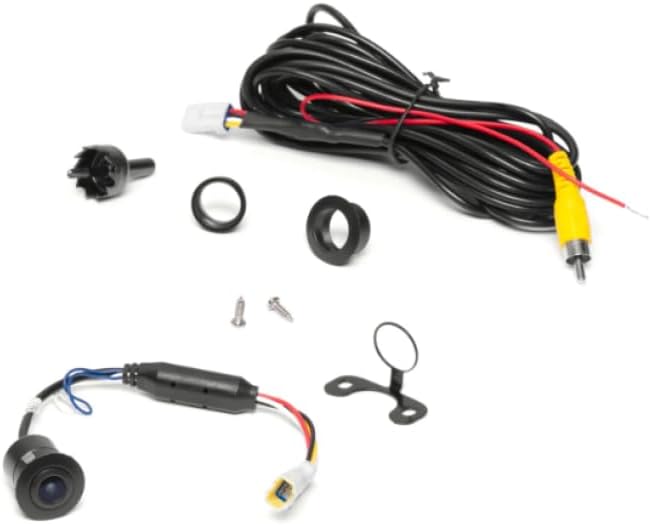
The Front Camera for Polaris RZR combines a vehicle-specific installation with a wide 170-degree field of view and 720p HD recording. Its 4.8 rating makes it one of the strongest-rated products in the guide, while its compatibility list gives buyers a useful starting point for determining whether it suits their machine.
We may earn a commission when you buy through this link, at no additional cost to you.
The wide lens is designed to reveal blind spots, rocks, steep drops, and tight spaces around the vehicle. A rugged aluminum alloy housing adds physical protection, and the scratch-resistant lens is intended to preserve visibility after repeated encounters with branches, dust, and debris.
Weather protection is another strength. An IP67 rating helps guard against rain, mud, and snow, while the stated temperature range spans very cold to hot conditions. Low-light performance is supported by a sensor designed to retain clarity at dusk, although 720p output remains below the resolution offered by 4K action cameras.
The installation requires drilling into a reserved front plastic panel and connecting the pre-wired terminal, so riders unwilling to modify that panel should look at factory-style alternatives. For compatible RZR owners who prioritize a wide view and durable forward-facing coverage, this is an appealing practical choice.
The 170-degree lens expands the visible area in front of the vehicle, which can be helpful when trail vegetation, elevation changes, or turns restrict the driver's normal view. It is best treated as an awareness aid, not a substitute for safe speed and active observation.
The IP67 enclosure and broad operating-temperature range suit riders who encounter changing weather. The aluminum body also resists impacts better than lightweight plastic alternatives, although correct sealing and connector protection remain important during pressure washing.
We may earn a commission when you buy through this link, at no additional cost to you.
The BOSS Audio Systems POLCAM is designed for Polaris RZR Ride Command vehicles and can occupy either a front or rear factory camera location. Its 3.6 rating is the lowest in this list, but the product serves a distinct purpose: flexible vehicle coverage with flush and surface mounting options.
We may earn a commission when you buy through this link, at no additional cost to you.
The 170-degree lens provides broad situational awareness, while the head unit's distance guide lines help the driver judge obstacles from different angles. The 628 by 586 resolution and 0.5 Lux low-light rating are more modest than the specifications of 4K portable cameras, making image detail the central trade-off.
Durability is a meaningful strength. The IP68 rating protects internal components from water and moisture, and included mounting hardware gives installers options for vehicles without a convenient factory camera opening. The product also includes a one-year parts and labor warranty.
This camera makes the most sense for a RZR owner who values installation options and wants either forward or rearward coverage through Ride Command. It is less attractive when recording quality is the top priority, but it remains a functional option for basic obstacle awareness and vehicle maneuvering.
Compatibility with both front and rear Polaris RZR factory camera locations gives owners more freedom than a fixed-position solution. That flexibility can be useful for a work-focused setup, reversing-heavy trails, or a vehicle that needs different coverage in different conditions.
On-screen distance guide lines help translate the camera image into a practical sense of proximity. They are most useful during slow maneuvering, but drivers should still inspect their surroundings directly before moving the vehicle.
We may earn a commission when you buy through this link, at no additional cost to you.
The AKASO EK7000 is a versatile action camera that can record from a helmet, handlebar, roll cage, or other OHV mounting point. It holds a 4.4 rating and records 4K30 video with 20MP photographs, giving riders substantially more detail than a standard vehicle backup camera.
We may earn a commission when you buy through this link, at no additional cost to you.
Electronic image stabilization helps reduce visible shake during movement, and a 4X zoom provides added framing flexibility. The supplied 131-foot waterproof case expands use beyond dry trails, while Wi-Fi connectivity and the AKASO GO app simplify mobile viewing, editing, and sharing.
It does not connect directly to Ride Command, and the included wrist remote is not waterproof. A microSD card is also not included. Those limitations make it less convenient as a permanent vehicle safety camera, but they do not diminish its value as a flexible recording device that can be removed after a ride.
Choose the EK7000 when recording quality, portability, and multiple mounting options matter more than seamless dashboard integration. It is a strong all-around choice for Polaris OHV riders who want detailed action footage and may also use the camera for hiking, cycling, or water recreation.
Recording at 4K30 preserves more scene detail than 720p vehicle camera systems. That extra clarity is valuable when reviewing a narrow trail, checking body positioning, or creating scenic videos that can be edited and shared.
Built-in electronic image stabilization smooths some of the shake associated with an off-road ride. It cannot create the perfectly level result of a dedicated gimbal, but it can make helmet- and cage-mounted footage more comfortable to watch.
We may earn a commission when you buy through this link, at no additional cost to you.
This 4K action camera stands out for its dual-screen design, consisting of a 2-inch rear IPS touchscreen and a 1.4-inch front display. It records 4K30 video and 20MP photos, giving Polaris riders a flexible portable camera with particularly accessible on-device controls.
We may earn a commission when you buy through this link, at no additional cost to you.
Two 1350mAh rechargeable batteries are included, which is useful for long trail days where access to power may be limited. Wi-Fi connectivity allows control, previewing, and sharing through a phone app, while storage support extends to 256GB for riders who want to retain high-resolution footage.
Electronic image stabilization helps smooth footage captured from a moving OHV, and the included waterproof case supports use down to 131 feet when properly installed. The camera itself should not be assumed waterproof without that case, and the remote's water resistance should also be checked before exposure.
This is a good pick for riders who want more direct control than a button-only action camera provides. It is not a Ride Command camera, and a microSD card is not included, but its screens, battery kit, and detailed recording modes make it convenient for documenting varied outdoor trips.
The rear touchscreen allows quick adjustments to modes, previews, and settings without removing the camera. The front display is also useful for confirming the lens view when the action camera is mounted on a helmet or vehicle surface.
Two included rechargeable batteries make it easier to complete a full day of mixed riding and recording. Actual runtime depends on resolution, stabilization, screen use, and temperature, so riders should carry the appropriate power setup for extended excursions.
We may earn a commission when you buy through this link, at no additional cost to you.
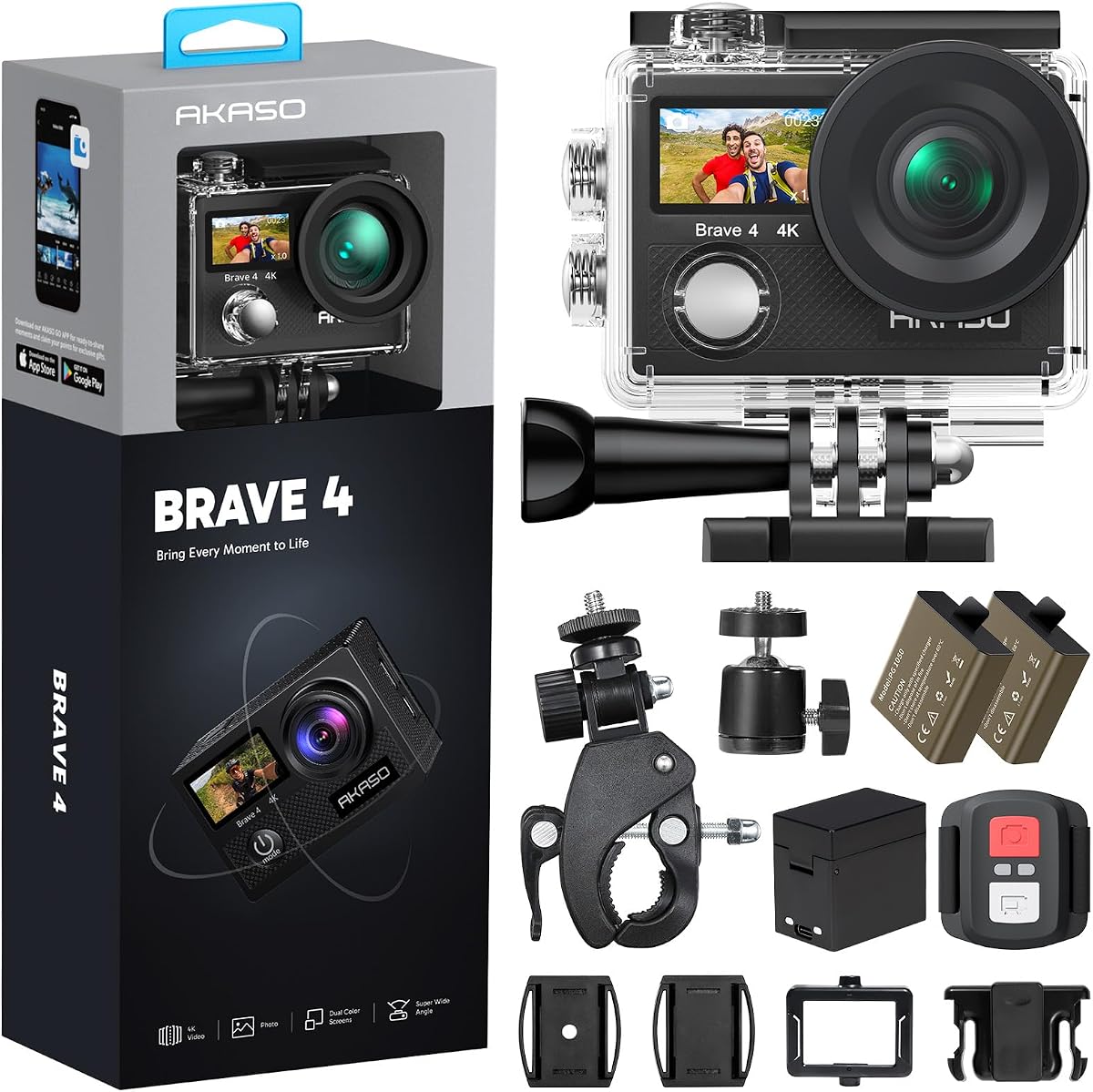
The AKASO Brave 4 combines 4K30 recording, 20MP photos, dual screens, and stabilization in a well-established action camera format. Its adjustable viewing angles—170, 140, 110, and 70 degrees—make it particularly adaptable to different Polaris OHV mounting positions.
We may earn a commission when you buy through this link, at no additional cost to you.
A wide setting can preserve context around the rider or vehicle, while narrower options may reduce unwanted edge distortion or tighten the composition. Built-in gyroscope technology supports steadier footage, and the front and rear screens simplify framing when the camera is attached to a helmet, cage, or other accessible surface.
The waterproof housing supports dives to 40 meters when correctly fitted, so the camera is not limited to dusty trails. Wi-Fi and HDMI provide convenient phone-based sharing and television connectivity. The kit includes a dual charger and two 1050mAh batteries, though a memory card is not included.
The Brave 4 is most attractive to riders who want multiple field-of-view options and dependable accessories in one package. It does not integrate with a vehicle display, but it is easier to reposition and reuse than a fixed camera. For trail recording with adjustable framing, it remains one of the most versatile choices.
Changing the viewing angle can make a mounted camera more useful without relocating its base. Riders can preserve a broad environmental view from a cage mount or use a tighter setting when a helmet or bumper position calls for a more focused frame.
Wi-Fi supports app-based viewing and sharing, while HDMI offers a direct route to a larger display for playback. These options are useful for reviewing footage after a ride or preparing a trip for friends and family.
We may earn a commission when you buy through this link, at no additional cost to you.
The AKASO 360 Action Camera Motorcycle Combo is the most advanced portable option in this guide. It captures fully immersive 5.7K 360-degree video through dual one-half-inch 48MP sensors and can produce 72MP panoramic photos, giving Polaris riders a way to recreate the entire environment around the camera.
We may earn a commission when you buy through this link, at no additional cost to you.
Its 360-SuperSmooth system uses advanced in-app stabilization to reduce shake and jitter, while 360-degree Horizon Lock keeps the horizon level during flips and turns. AI subject tracking can keep a selected subject centered, and the shoot-first, frame-later concept allows the camera to collect a full spherical scene before the rider chooses the final angle.
The invisible selfie stick is included and disappears from the resulting footage, enabling third-person-style shots from a single rider. AKASO 360 Studio adds editing tools for reframing and enhancing immersive clips, while DNG8 RAW mode provides additional editing latitude in dim conditions.
This premium action camera is not intended to replace a Polaris front or rear safety camera. Its file sizes, specialized workflow, and stitching requirements make it most appropriate for creators and adventure riders who want a cinematic 360-degree record of a Polaris outing.
A 360-degree camera records the full surroundings rather than a single forward field of view. On an OHV trail, that perspective can preserve unexpected turns, neighboring riders, passing vehicles, and the landscape behind the action camera.
The included invisible selfie stick can create the appearance that another person is following the rider. A stable mount and careful editing are still necessary, but the system saves the need for a second camera operator during solo adventures.
We may earn a commission when you buy through this link, at no additional cost to you.
The AKASO Brave 4 64GB Bundle packages the camera with a 64GB U3 microSD card and two rechargeable 1050mAh batteries. That makes it a more complete starting point than a bare camera for riders who want to mount, record, and review footage without sourcing storage and spare power first.
We may earn a commission when you buy through this link, at no additional cost to you.
Recording capabilities remain substantial: 4K30 video, several high-frame-rate lower-resolution modes, and 20MP photographs. The four viewing angles and gyroscope-based stabilization help produce flexible, steady footage from a helmet, roll cage, or other OHV mounting location.
Dual screens support quick framing and playback, while Wi-Fi and HDMI make sharing and editing straightforward. The included waterproof housing allows use to 131 feet when properly installed, and each battery is listed as capable of up to 90 minutes of recording under the stated conditions.
This bundle is a practical recommendation for a first action camera or a rider replacing an older setup. It is less compelling for someone who already owns a suitable U3 card and batteries, and it does not provide direct vehicle-screen integration. For portable Polaris trail documentation, however, it offers a balanced and ready-to-use package.
Including a compatible memory card removes a common source of frustration on the first outing. Riders still need to confirm the card's formatting and capacity requirements, but they do not need to purchase storage before the initial setup.
Two batteries let one charge while the other is in use, extending shooting opportunities. Actual run time varies with settings and conditions, so battery rotation is more useful than relying on a single charge for an entire day.
We may earn a commission when you buy through this link, at no additional cost to you.
The AKASO Brave 4 256GB Bundle is built for riders who expect to record extensively without changing cards. Its 4.7 rating places it among the best-reviewed products in the guide, and the included 256GB U3 microSD card provides generous room for 4K clips, photographs, and multiple trail sessions.
We may earn a commission when you buy through this link, at no additional cost to you.
The underlying camera supports 4K30 video, 20MP images, electronic stabilization, and viewing angles from 70 to 170 degrees. Dual screens help with setup, while Wi-Fi and HDMI provide convenient routes for previewing and sharing. It can be placed in the supplied waterproof case for use down to 131 feet.
Two rechargeable 1050mAh batteries and a USB charging solution are included, making the package suitable for extended recording. The wrist remote is not waterproof, so it should remain away from water and wet environments. Video files should also be backed up regularly because a single high-capacity card can hold a large amount of important footage.
This bundle is ideal for content creators, guide riders, or enthusiasts who routinely record long adventures. It offers the same core camera functions as the smaller Brave 4 bundles, with storage as the primary difference. For permanent safety monitoring, a vehicle-specific camera remains the better choice.
A 256GB card reduces interruptions during long rides and multi-day trips. Riders can capture extensive 4K material, but should monitor remaining capacity and maintain a separate backup of any footage they want to preserve.
The camera's 4K30 capture and 20MP photo capability provide useful detail for both safety review and content creation. Image stabilization helps reduce movement artifacts, while adjustable angles make the camera easier to use across different mounting positions.
We may earn a commission when you buy through this link, at no additional cost to you.
The Motorcycle 4K Action Camera is designed for extended recording in outdoor environments, with 4K30 video, 20MP photos, dual IPS screens, and up to 150 minutes of stated battery life. Its 4.7 rating makes it one of the strongest options for riders who prioritize endurance.
We may earn a commission when you buy through this link, at no additional cost to you.
A six-axis gyroscope stabilizes footage in rough conditions, while the 145-degree wide-angle lens captures a generous view from a helmet, bar, or vehicle mount. Pre-record, post-record, time-lapse, and loop recording modes offer flexibility for documenting trail activity or monitoring selected periods.
The camera supports recording while charging, which is helpful on long trips when a power source is available. Wi-Fi connects with a mobile app for transfers, previews, and sharing. Waterproofing is provided through the rugged IP68 housing, and the stated 150-minute runtime depends on usage and recording settings.
This camera is best for long riding days, action recording, or users who want flexible recording functions. It is not a direct replacement for an integrated Polaris camera, and buyers should verify storage requirements and housing fit. As a portable OHV recorder, however, it combines endurance with useful intelligent recording options.
The stated battery runtime gives riders more confidence to record throughout a full outing without frequently swapping batteries. Recording while charging extends that flexibility further, although charging heat and weather should be considered.
Pre-record and post-record can capture moments around a trigger, while loop recording suits continuous documentation. Time-lapse offers a different way to present a trail sequence, and the wide lens preserves context around the rider.
We may earn a commission when you buy through this link, at no additional cost to you.
The most useful camera for a Polaris OHV is the one that matches the riding task, vehicle configuration, and desired output. Begin with integration versus portability, then evaluate field of view, image quality, weather resistance, power, and installation requirements.
A vehicle-specific camera is the most natural choice when the goal is safe maneuvering and a consistent view through Ride Command. The Polaris Off Road Front Camera Kit, the Front Camera for Polaris RZR, and the BOSS Audio POLCAM are designed around particular vehicle locations, wiring, or displays. Their main advantage is a stable, repeatable installation that does not require the rider to aim a small screen while moving.
An action camera is better when the goal is adventure footage, helmet mounting, social sharing, or use across several vehicles. Products such as the AKASO EK7000 and AKASO Brave 4 can be repositioned as needed, but they do not provide the same effortless integration with the vehicle's display and controls.
A wide lens can reveal more of the trail immediately beside or ahead of the vehicle. The Front Camera for Polaris RZR and BOSS Audio POLCAM both offer a 170-degree view, while the AKASO 360 product goes further by recording an entire spherical scene. Wider views are useful on tight wooded trails, but they can also make objects appear smaller and create edge distortion.
Choose an angle that matches the mounting position and display. A vehicle camera intended for obstacle awareness may benefit from a broad perspective, whereas a helmet camera can use a tighter setting to emphasize the path. Always confirm that the included angle options can be changed while the camera is mounted.
Resolution determines how much fine detail remains available for review, but it is only one part of image quality. The vehicle-specific products provide 720p HD or a 628 by 586 image feed, while the portable action cameras record at up to 4K30 and capture 20MP photographs. The AKASO 360 model uses dual 48MP sensors for 5.7K 360-degree video and 72MP photos.
Low-light performance deserves equal attention. The RZR front camera includes a sensor designed to improve light transmission, while the BOSS Audio POLCAM lists a 0.5 Lux rating. For long rides near sunset or under heavy tree cover, a dedicated low-light sensor and image stabilization may matter more than headline resolution.
OHV cameras encounter constant vibration, jolts, and rapid changes in direction. Electronic stabilization and gyroscope-based stabilization can reduce visible shake, making footage easier to review and more comfortable to watch. The AKASO EK7000, AKASO Brave 4, Motorcycle 4K Action Camera, and AKASO 360 all include forms of electronic stabilization.
Vehicle dashboard cameras are usually fixed firmly and primarily show a navigational perspective, so stabilization is less central to their purpose. For action cameras, stabilization should be considered together with field of view because aggressive cropping can narrow the recorded scene. A 360 camera can also reframe footage after recording, but requires a more involved editing process.
Off-road vehicles encounter rain, mud, snow, dust, and water crossings. Vehicle-specific systems such as the Front Camera for Polaris RZR and BOSS Audio POLCAM carry IP67 and IP68 ratings respectively. Portable cameras commonly include a waterproof case, but their water resistance may apply only when the housing is correctly installed.
The camera body alone should never be assumed waterproof. Pay attention to the rating of the complete assembly, the condition of seals, and the exposure of cables or connectors. If the vehicle is pressure-washed, protect ports and inspect the housing after cleaning. For regular wet-weather riding, integrated sealed wiring is generally less vulnerable than a portable action camera with exposed mounts.
Power needs vary dramatically between a fixed vehicle camera and a portable action camera. A Ride Command camera draws from the vehicle and does not require daily charging, while portable units depend on batteries, vehicle power, or an available charging source. The Motorcycle 4K Action Camera lists up to 150 minutes of recording and supports recording while charging.
Several AKASO bundles include two rechargeable batteries, which allows one battery to charge while the other is in use. Actual run time varies with resolution, stabilization, screen use, and temperature. Riders should carry suitable charging equipment for extended trips and avoid leaving batteries in a hot vehicle where storage conditions are unsuitable.
High-resolution action cameras generate enough data to make storage planning important. The AKASO Brave 4 bundles include 64GB or 256GB U3 microSD cards, while the AKASO 360 package includes 128GB. The EK7000 and 4K Touch Screen Action Camera do not include memory cards, so purchasers must budget for compatible storage separately.
Wi-Fi is convenient for mobile previews and sharing, but transferring a large library can take time. Riders who depend on action-camera footage should maintain backups rather than relying on a single card or phone. For continuous vehicle awareness, local Ride Command display integration is generally faster and less distracting than app-based transfer.
The most important fitment check is whether the camera is intended for the rider's exact Polaris model, model year, and display configuration. The Front Camera for Polaris RZR includes a detailed compatibility list and instructs buyers to verify the connector. The BOSS Audio POLCAM supports factory camera locations and also includes alternatives for vehicles without a suitable location.
Installation can involve drilling a reserved panel, connecting a pre-wired terminal, routing cables, or mounting a portable camera to a cage or helmet. Confirm that the chosen location remains protected from branches, straps, and rider movement. If the work will be performed at home, follow the included instructions carefully and avoid blocking emergency controls or factory components.
Begin by confirming the camera's compatibility, checking every connector, and identifying the intended use. For a vehicle-specific system, install it according to the included instructions, route wiring away from sharp edges and moving components, and test the display before traveling. For a portable action camera, choose a stable helmet, cage, bumper, or bar mount, tighten every fastener, and confirm that the camera will not interfere with controls or the rider's movement.
Before the first substantial ride, learn the basic operating controls and perform a short test recording. Check that the date, orientation, stabilization mode, field of view, and resolution are correct. Format the memory card in the recommended application, confirm that it appears in the camera menu, and verify that the housing seals are seated correctly before taking the camera into water or wet terrain.
After each outing, power down the camera, remove the memory card, and back up important footage to a second location. Clean the lens with a soft microfiber cloth, remove mud and salt from the housing, and allow waterproof components to dry fully before storage. Inspect mounts, seals, cable insulation, and battery contacts, and avoid leaving the camera or batteries in extreme heat or cold.
A Polaris-specific camera is designed around a particular vehicle's factory camera location, wiring, and display system, usually providing a consistent view through Ride Command. An action camera is portable and can record 4K video, take still photographs, and move between a helmet, cage, bumper, or other vehicle. The first emphasizes convenient vehicle awareness, while the second emphasizes flexible recording and content creation.
Most action cameras can be used if they have a secure, unobstructed mounting point and the chosen model is suitable for the riding environment. Consider vibration, weather exposure, helmet-safety rules, cable placement, and access to the controls. A camera must never interfere with the rider, vehicle controls, restraints, or required safety equipment.
The Polaris Off Road Front Camera Kit is the most focused factory-style option for a forward view, while the Front Camera for Polaris RZR adds a specified 170-degree perspective. Wide action-camera views can also capture terrain around the rider. No camera replaces active observation, reduced speed, and proper judgment on unfamiliar trails.
It can be, provided the case is properly closed, the seals are undamaged, and the camera is not operated while the housing is open. Many action cameras are waterproof only when placed inside their included case. Mud can obscure the lens or trap moisture against connectors, so the assembly should be cleaned and inspected after each wet ride.
The required capacity depends on the codec, frame rate, and length of recording, but 4K files are substantially larger than 720p or 1080p files. Bundles with 64GB or 128GB cards suit shorter outings, while 256GB gives more room for extended rides. Always use a card meeting the camera's speed and capacity requirements.
The vehicle-specific products described here are primarily designed to send live images to a head unit, so their storage method differs from that of removable action-camera cards. Confirm the complete display system and recording requirements before purchasing. Do not assume that an included microSD card is available for every product in the guide.
A front camera with a sensor designed to improve light transmission can remain useful at dusk, and the BOSS Audio POLCAM includes a 0.5 Lux low-light specification. Action cameras also benefit from stabilization and image processing, but darkness can still reduce detail and color. Supplement any camera with headlights and careful, responsible riding.
Use a rigid, properly tightened mount and select a stabilization mode suited to the activity. Electronic stabilization can reduce shake, although it cannot fully correct every impact or rough surface. A helmet mount may feel more stable on some trails, while a vehicle mount can provide a broader view. Check the resulting footage before relying on it for a long trip.
The Polaris Off Road Front Camera Kit is the strongest overall choice for a rider who wants focused Polaris integration and a forward view through Ride Command. The Front Camera for Polaris RZR stands out as a value-oriented vehicle camera with a 170-degree view, while the AKASO 360 Action Camera offers the most advanced option for immersive 360-degree content.
Prioritize the use case before choosing between vehicle and portable cameras. Choose a dedicated Polaris system for dependable in-vehicle visibility, an action camera for removable 4K recording and varied mounting, and a larger-capacity bundle for long adventures. In every case, verify exact vehicle fitment, connectors, mounting access, and weather-sealing requirements before installation.
Ratings, included accessories, and product configurations can change, and prices also fluctuate over time. Review the current listing and manufacturer details at the point of purchase, particularly for compatibility, storage media, waterproof accessories, and installation hardware.
